Transparency: This page contains affiliate links. If you click and buy, I may make a commission at no extra cost to you.
I spend hours scouring the internet for rare books and historical ephemera so you don’t have to. Here are my current favorite searches for authentic pieces.
Medieval Manuscripts
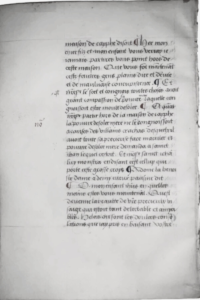
Authentic vellum leaves from the 13th–16th centuries. Perfect for framing. Before paper, there was vellum. Crafted from prepared calfskin, this material is incredibly smooth, durable, and translucent. Unlike paper which yellows and crumbles, vellum is virtually indestructible—which is why these 500-year-old leaves still look as fresh as the day they were scribed.
Easton Press

Easton Press is renowned for its collector edition books beautifully bound in genuine leather. Imagine the smell of real leather and the gleam of 22kt gold on your shelf. Easton Press editions are a tactile delight: heavy in the hand, with moiré silk endsheets and gilded page edges that catch the light. They turn reading into a ritual. Here are some of the latest offerings you can buy now.
Vintage Handwritten Letters
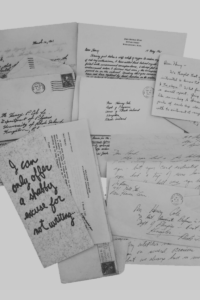
Capture unique snippets of history. Before the internet, people wrote out their heartfelt feelings, business dealings, and even threats and random rants down on paper. You never know what kind of letters have been preserved over the centuries. You can come across anything from love letters from Civil War soldiers to sweethearts back home to merchants discussing the spices or textiles they’re purchasing.
The Writer’s Desk
Tools for the analog soul. Slow down your writing ritual with these vintage essentials.
Antique Dip Pens and Inkwells
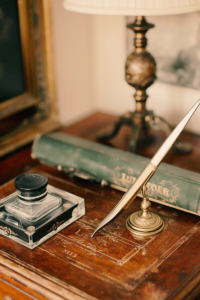
Before the fountain pen, there was the dip pen and the inkwell. Used by everyone from Jane Austen to Charles Dickens, this simple setup forces you to pause every few sentences to reload with ink, helping you get into a built-in rhythm that slows down your thoughts and makes every word intentional. Whether you choose a heavy glass well to anchor your desk or a flexible nib for expressive lines, these tools turn writing into a tactile ritual.
Vintage Fountain Pens
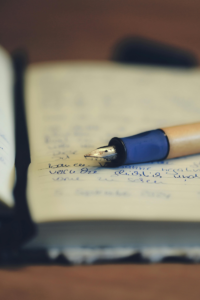
For the writer on the go, nothing beats a vintage fountain pen. Unlike modern ballpoints, a gold nib adapts to your hand over time, creating a line that is uniquely yours. Whether it’s a Parker 51 or a celluloid masterpiece, these pens were built to last a lifetime. You can find restored or well-preserved ones that still write beautifully today!
The Sigillum Collection: Seals, Wax, & Signet Rings
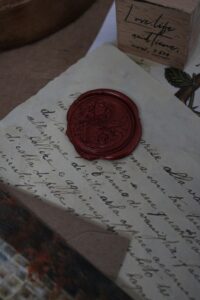
The original form of privacy protection. Before self-sealing envelopes, a wax seal was the only way to ensure your correspondence remained private. Today, adding a wax seal to a letter is the ultimate power move—a symbol of authenticity and personal flair that turns a simple note into a keepsake. Look for vintage brass or silver seals with unique monograms or mottos.
While a desk seal was a stationary tool kept for formal correspondence, the signet ring was a wearable signature—a portable mark of identity that allowed a sender to authorize documents and secure secrets wherever they traveled. Whether carved into a heavy brass handle or a gold-set intaglio stone, these artifacts represent the original ‘biometric’ security of the handwritten world
In the world of the Paper Analyst, a seal is more than a closure—it is a mark of identity. Before the digital age, the security of a secret rested on the unique impression of a signet ring or a hand-carved desk seal. We have curated a selection of authentic artifacts and high-quality tools for those who still believe that some messages are meant to be locked in wax.
EXPLORE SEALING WAX & SUPPLIES
Vintage and Antique Style Stationary
The canvas for your thoughts. In addition to pen and the ink, you need the paper. Don’t ruin the experience with cheap printer paper. Write like your ancestors did, when people took the time to put down their ideas with some thought and care. If you need a modern scientific reason, there’s research showing that manually writing things down activates parts of your brain (that don’t happen when you’re using a keyboard!). Look for ‘Florentine’ (known for intricate Italian borders), ‘Laid’ (with subtle texture lines), or ‘Deckle Edge’ (with rough, handmade borders) to give your correspondence a timeless, tactile weight.