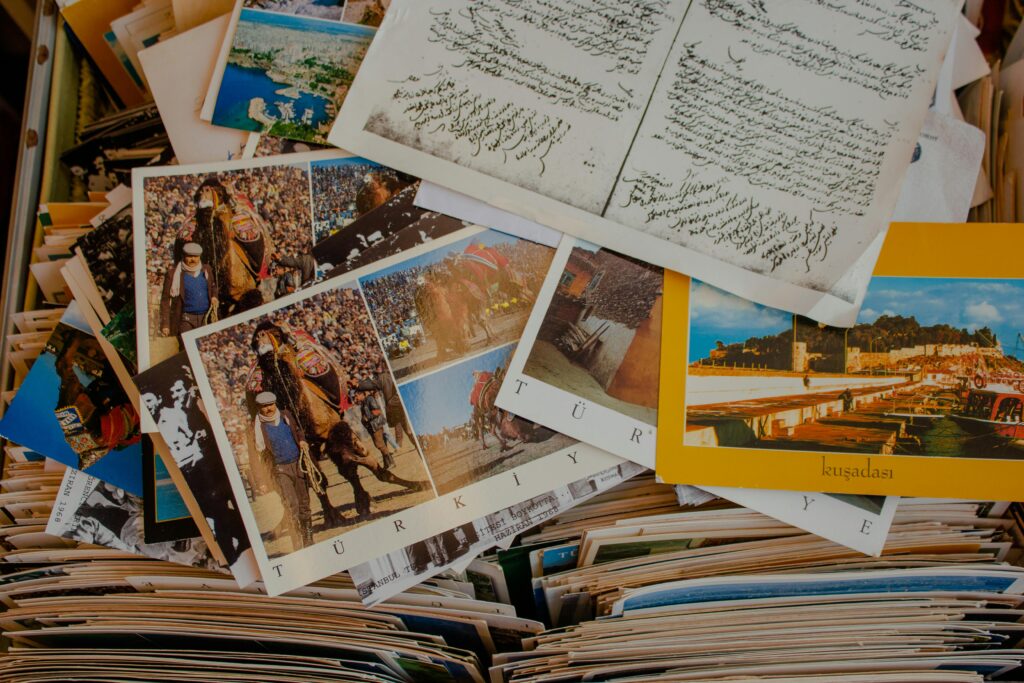
You’ve probably heard collectors mention “ephemera” with reverence, but what exactly is it? The term sounds mysterious, but the concept is beautifully simple: ephemera refers to paper items that were meant to be temporary—used once and thrown away. Yet these humble scraps of paper have become some of the most fascinating collectibles around.
The Beauty of the Temporary
The word “ephemera” comes from the Greek word for “lasting only a day.” In the collecting world, it encompasses everything from vintage postcards and theater tickets to old receipts, trade cards, and handwritten letters. These items weren’t created to last centuries—they were the everyday paper of their time. That’s precisely what makes them so valuable today.
Think about it: a fancy leather-bound book was meant to be preserved, but a 1920s grocery receipt? That was destined for the trash. The fact that it survived makes it a rare window into daily life of the past.
What Counts as Ephemera?
The category is wonderfully broad. Here are some popular types:
- Postcards and greeting cards
- Advertising materials (posters, flyers, trade cards)
- Tickets (theater, train, sporting events)
- Letters and correspondence
- Receipts and invoices
- Maps and travel brochures
- Menus and programs
- Photographs
- Newspapers and magazines
- Labels and packaging
Basically, if it’s paper and wasn’t meant to be permanent, it’s probably ephemera.
Why Collect Ephemera?
Ephemera offers something that formal historical records often miss: authenticity. A handwritten letter from a Civil War soldier tells you more about daily life than most history books. A 1950s diner menu reveals actual prices and popular dishes. These items are unfiltered snapshots of their era.
Plus, ephemera is often more affordable than other collectibles. While a first edition book might cost thousands, you can start an ephemera collection with items under $20. It’s accessible, diverse, and endlessly interesting.
Getting Started
Begin with what interests you. Love vintage travel? Collect old postcards and brochures. Fascinated by advertising history? Hunt for trade cards and product labels. The beauty of ephemera collecting is that you can focus on anything that speaks to you.
Condition matters, but don’t be too precious about it. Some wear and tear is expected—these items were used! Look for pieces with clear text, interesting graphics, or historical significance.
Unlock the Stories in Your Collection
Deciphering old handwriting, identifying document types, and researching the significance of ephemera can be time-consuming. That’s where Book & Paper Analyst becomes invaluable. The app reads both handwritten and typewritten documents, identifies keywords to help you understand what type of document you’re holding, and can even recognize potentially famous or historically significant pieces. Simply photograph your ephemera and let the app do the detective work—perfect for estate sale finds or organizing your growing collection.
Start exploring the world of ephemera, and you’ll never look at old paper the same way again!
Leave a Reply